November 18, 2026 | Ashok Singh
Medical consumables are an essential part of everyday healthcare operations. Hospitals, clinics, diagnostic laboratories and other healthcare facilities rely on a consistent supply of disposable medical products to support patient care, diagnostic procedures, clinical preparation and routine medical activities.
From alcohol swabs and blood lancets to gloves, IV cannulas and infusion sets, medical consumables serve different purposes across healthcare environments. Selecting suitable products, managing inventory and sourcing from dependable suppliers are important considerations for healthcare institutions.
Understanding the different categories of medical consumables and their applications can help hospitals, clinics, laboratories and procurement teams make informed purchasing decisions.
What Are Medical Consumables?
Medical consumables are products and supplies used during healthcare, clinical, diagnostic, treatment and patient-care activities. Many consumables are designed for single use, while others may have specific usage instructions determined by their intended application.
Unlike durable medical equipment, which is designed for repeated use over an extended period, consumables are regularly replenished as part of healthcare operations.
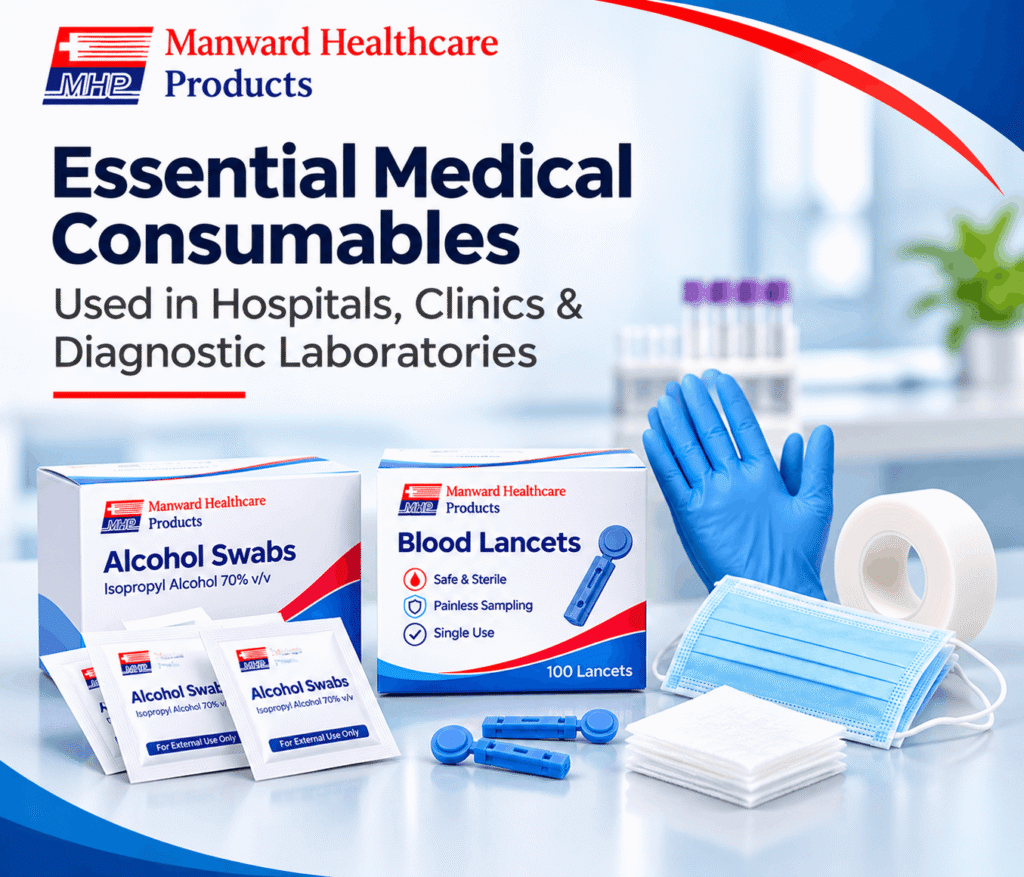
Examples of medical consumables include:
- Alcohol swabs and antiseptic wipes
- Blood lancets
- Examination gloves
- IV cannulas
- IV infusion sets
- Gauze and dressing materials
- Syringes and needles
- Disposable masks
- Medical cleaning wipes
- Other single-use healthcare products
The type and quantity of consumables required will vary according to the size of the facility, services provided, patient volume and operational needs.
Why Medical Consumables Are Important in Healthcare
Medical consumables support daily activities across hospitals, clinics, laboratories and other healthcare settings.
- Supporting Routine Healthcare Procedures
Many clinical procedures require disposable supplies for preparation, sampling, administration or other appropriate applications. Having the necessary products available helps healthcare teams manage routine activities efficiently.
- Supporting Hygiene and Infection Prevention
Appropriate medical consumables play a role in healthcare hygiene and infection prevention practices. Products should be selected, stored and used according to their intended purpose, product labeling and applicable healthcare protocols.
- Supporting Diagnostic Activities
Diagnostic laboratories and healthcare facilities require products for sample collection, testing preparation and other procedures. Consumables such as blood lancets and alcohol swabs may form part of their regular supply requirements.
- Maintaining Operational Continuity
Healthcare facilities require regular replenishment of many products. Maintaining suitable stock levels helps facilities plan their purchasing requirements and reduce the risk of disruptions caused by unavailable supplies.
- Supporting Healthcare Professionals
The availability of suitable medical consumables supports the daily workflows of healthcare professionals, laboratory technicians, nurses and other staff working in clinical and diagnostic environments.
Essential Medical Consumables Used in Hospitals
Different departments require different products based on their activities. Below are some common categories of medical consumables used in healthcare facilities.
- Alcohol Swabs
Alcohol swabs are individually packed disposable pads containing an alcohol-based solution, commonly used for specified skin preparation and antiseptic applications.
Many alcohol swabs contain 70% isopropyl alcohol and are used for skin preparation before injections and other appropriate applications according to the product labeling.
Common features
- Individually packed sachets
- Alcohol-based formulation
- Non-woven or other specified swab material
- Convenient single-use format
- Compact packaging
Applications
Alcohol swabs may be used in hospitals, clinics, diagnostic centres and healthcare settings for appropriate skin preparation applications.
Healthcare buyers should evaluate alcohol concentration, material, dimensions, sachet packaging, quantity per box and product labeling when sourcing alcohol swabs.
- Blood Lancets
Blood lancets are small medical devices designed to obtain capillary blood samples through a skin puncture.
They are commonly used in blood glucose monitoring and selected diagnostic applications requiring capillary blood sampling.
Common features
- Fine needle or lancet tip
- Sterile packaging
- Single-use design for many products
- Protective cap or safety mechanism depending on design
- Different product specifications and configurations
Applications
Blood lancets are commonly used in:
- Blood glucose monitoring
- Capillary blood sampling
- Point-of-care testing
- Selected diagnostic procedures
Blood sampling devices should be used according to their instructions. Single-use lancets should never be reused or shared.
- Examination Gloves
Examination gloves are used in healthcare environments as part of appropriate hygiene and protective practices.
They are available in different materials, including latex and nitrile, with product variations in thickness, size, fit, surface texture and intended application.
Common types
- Latex examination gloves
- Nitrile examination gloves
- Powder-free gloves
- Powdered gloves, where available and appropriate
Applications
Examination gloves are used across different healthcare environments, including clinics, hospitals, diagnostic laboratories, patient care areas and other settings requiring suitable hand protection.
The appropriate glove should be selected according to the task, material compatibility, allergies, product specifications and healthcare protocols.
- IV Cannulas
An intravenous cannula is a medical device used to provide access to a vein for appropriate intravenous applications.
IV cannulas are available in different sizes and specifications to support various clinical requirements.
Important product characteristics
- Cannula gauge and size
- Material
- Sterile packaging
- Connector design
- Protective components
- Intended application
Applications
IV cannulas are used in appropriate clinical settings for intravenous access, including applications involving fluid administration and other prescribed intravenous therapies.
Product selection and placement should be performed by trained healthcare professionals following appropriate clinical protocols.
- IV Infusion Sets
IV infusion sets are used in healthcare settings for the administration of intravenous fluids through compatible systems.
An infusion set typically includes tubing, a drip chamber, a spike, connectors and other components depending on the design.
Common components
- Tubing
- Drip chamber
- Spike
- Flow-control components
- Injection port, where applicable
- Connector
- Fluid filter, depending on the product
Applications
IV infusion sets are used in hospitals and clinics for prescribed fluid administration and other applications according to the product’s specifications.
Healthcare facilities should check product specifications, compatibility, sterility, packaging integrity and single-use instructions before procurement.
- Gauze, Dressings and Wound-Care Consumables
Gauze and dressing materials are commonly used in wound care and related healthcare applications.
Products may vary in material, absorbency, size, construction and intended use.
Common examples
- Gauze pads
- Sterile dressings
- Non-woven dressing materials
- Absorbent wound-care products
- Bandages and related supplies
These products are selected according to the type of wound, clinical requirement and healthcare professional’s assessment.
- Syringes and Needles
Syringes and needles are widely used medical consumables for applications such as medication administration, fluid withdrawal and other procedures as appropriate.
Different sizes, capacities, needle configurations and product specifications are available.
Purchasing considerations
- Syringe capacity
- Needle size and configuration
- Sterility
- Packaging
- Single-use labeling
- Intended application
Healthcare facilities should purchase products appropriate for their clinical requirements and follow safe-use and disposal protocols.
- Medical Wipes and Cleaning Wipes
Medical and cleaning wipes are available in different formulations and material types for various cleaning and hygiene applications.
Product types may include alcohol wipes, disinfectant wipes, wet wipes and dry wipes.
The intended use is determined by the product’s formulation, material and manufacturer instructions.
Healthcare facilities and other institutional buyers should carefully distinguish between wipes intended for medical applications, skin preparation, equipment cleaning and general surface cleaning.
Medical Consumables Used in Diagnostic Laboratories
Diagnostic laboratories have specific consumable requirements related to sample collection, preparation, testing and operational hygiene.
Common supply categories may include:
- Blood sampling products
- Alcohol swabs
- Blood lancets
- Gloves
- Syringes and needles
- Specimen collection products
- Laboratory tubes and containers
- Cleaning and hygiene supplies
- Test-specific disposable products
The exact requirements vary according to the laboratory’s services, test menu, equipment, procedures and applicable protocols.
For laboratories, product availability, packaging, storage conditions, documentation and supply consistency are important purchasing considerations.
How Hospitals Should Manage Medical Consumables Inventory
Inventory management is an important part of hospital procurement and operational planning.
Poor inventory planning can contribute to stock shortages, excess stock, product expiry, storage challenges and unnecessary procurement costs.
- Identify Regularly Used Products
Facilities should identify the consumables used regularly across departments and determine their typical usage patterns.
- Establish Reorder Levels
Setting appropriate reorder points can help purchasing teams replenish products before stock becomes insufficient.
- Monitor Expiry Dates
Medical consumables should be checked regularly for expiry dates and packaging integrity. Inventory rotation practices can help ensure products are used within their permitted shelf life.
- Maintain Organized Storage
Products should be stored according to the manufacturer’s instructions and facility requirements. Proper organization makes it easier to monitor inventory and identify products that need replenishment.
- Work With Dependable Suppliers
Healthcare facilities may benefit from working with suppliers who can provide clear product information, communicate availability and support regular purchasing requirements.
- Plan Bulk Procurement Carefully
Bulk purchasing can be useful for facilities with predictable consumption. However, order quantities should be based on demand, shelf life, storage capacity, budget and replenishment schedules.
How to Choose a Reliable Medical Consumables Supplier
Selecting a supplier is an important decision for hospitals, clinics, laboratories, distributors and other healthcare businesses.
Before finalizing a supplier, buyers should consider the following:
Product Range
Check whether the supplier offers the products needed for your facility or business.
Product Specifications
Review product material, dimensions, packaging, intended use, sterility and other relevant details.
Quality Documentation
Request appropriate documentation, certificates and product information applicable to the specific products being purchased.
Supply Capability
Evaluate whether the supplier can support the required order quantities, expected purchasing frequency and delivery requirements.
Packaging and Storage
Check packaging configuration, expiry information and storage conditions.
Communication and Customer Support
Clear communication regarding product specifications, quotations, availability and orders can simplify the purchasing process.
Bulk and Institutional Requirements
Hospitals and distributors should discuss their expected quantities, product range, delivery schedules and recurring order requirements with prospective suppliers.
Medical Consumables Procurement for Hospitals and Distributors
Medical consumables procurement involves identifying suitable products, evaluating suppliers, comparing specifications, planning inventory and maintaining a dependable supply.
Hospital procurement teams may purchase products for different departments and services. Medical distributors and wholesalers, meanwhile, may need to source multiple categories to support their customers.
Important procurement considerations include:
- Product quality and specifications
- Manufacturer credibility
- Packaging and quantities
- Product documentation
- Pricing and commercial terms
- Availability
- Delivery timelines
- Repeat-order capability
- Storage and expiry management
A structured purchasing process helps organizations make better-informed decisions while managing their operational and supply requirements.
Manward Healthcare Products: Medical Consumables and Healthcare Supply
Manward Healthcare Products is a manufacturer, supplier and exporter of medical and healthcare products, established in 2009 in Noida, Uttar Pradesh, India.
Its product portfolio includes alcohol swabs, blood lancets, alcohol wipes, sterile lancets, screen cleaning wipes and selected medical devices and consumables.
The company describes its infrastructure as including procurement, manufacturing, quality testing, warehousing and packaging, research and development, and sales and marketing.
For hospitals, clinics, diagnostic laboratories, medical distributors and institutional buyers, Manward offers a range of products for healthcare sourcing requirements.
Businesses looking for medical consumables, product specifications or bulk supply enquiries can connect with Manward Healthcare Products.
Website: https://manwardhealthcare.com/
Contact: +91 9971686680 | +91 9711360212
Conclusion
Medical consumables support many everyday activities in hospitals, clinics and diagnostic laboratories. From alcohol swabs and blood lancets to gloves, IV cannulas, infusion sets, dressings and other disposable products, each category serves a different purpose within healthcare operations.
For healthcare institutions and medical distributors, selecting suitable consumables requires attention to product specifications, intended applications, packaging, quality documentation, inventory requirements and supplier reliability.
A well-planned sourcing approach can help healthcare organizations manage their procurement needs more effectively and support consistent day-to-day operations.
Looking for a medical consumables supplier?
Connect with Manward Healthcare Products to explore product options and discuss your healthcare supply requirements.
🌐 https://manwardhealthcare.com/
📞 +91 9971686680 | +91 9711360212
Frequently Asked Questions (FAQs)
What are medical consumables?
Medical consumables are supplies used in healthcare, diagnostic, clinical and patient-care activities. Many are disposable or designed for a specific limited-use application.
What are the most commonly used medical consumables in hospitals?
Common categories include gloves, alcohol swabs, syringes, needles, blood lancets, IV cannulas, infusion sets, dressings, gauze, wipes and other products required by different hospital departments.
Why are medical consumables important?
Medical consumables support clinical procedures, patient care, diagnostic activities, hygiene practices and daily healthcare operations.
What medical consumables are used in diagnostic laboratories?
Diagnostic laboratories may use blood sampling products, lancets, alcohol swabs, gloves, specimen collection products, tubes, containers, cleaning supplies and test-specific consumables.
How can hospitals manage medical consumables inventory?
Hospitals can manage inventory by monitoring usage, establishing reorder levels, checking expiry dates, organizing storage, reviewing demand and coordinating with suppliers.
How should hospitals choose a medical consumables supplier?
Hospitals should evaluate the supplier’s product range, specifications, documentation, supply capability, packaging, communication, pricing and ability to meet recurring procurement requirements.
What should buyers check when purchasing medical consumables in bulk?
Buyers should check product specifications, quantity per box and carton, expiry dates, storage conditions, documentation, order terms, delivery schedules and supply availability.
Where can medical consumables be sourced in India?
Medical consumables can be sourced from manufacturers, authorized suppliers, wholesalers and distributors. Buyers should verify product information and supplier suitability before purchasing.
Medical consumables for healthcare. Supply solutions for businesses.
Contact Manward Healthcare Products for product and bulk sourcing enquiries.
Website: https://manwardhealthcare.com/
Phone: +91 9971686680 | +91 9711360212
