November 19, 2026 | Ashok Singh
Introduction
Hospitals depend on medical consumables for routine clinical, diagnostic and support activities. Supplier selection therefore involves product suitability, documentation, availability, cost and service—not price alone.
Define the requirement
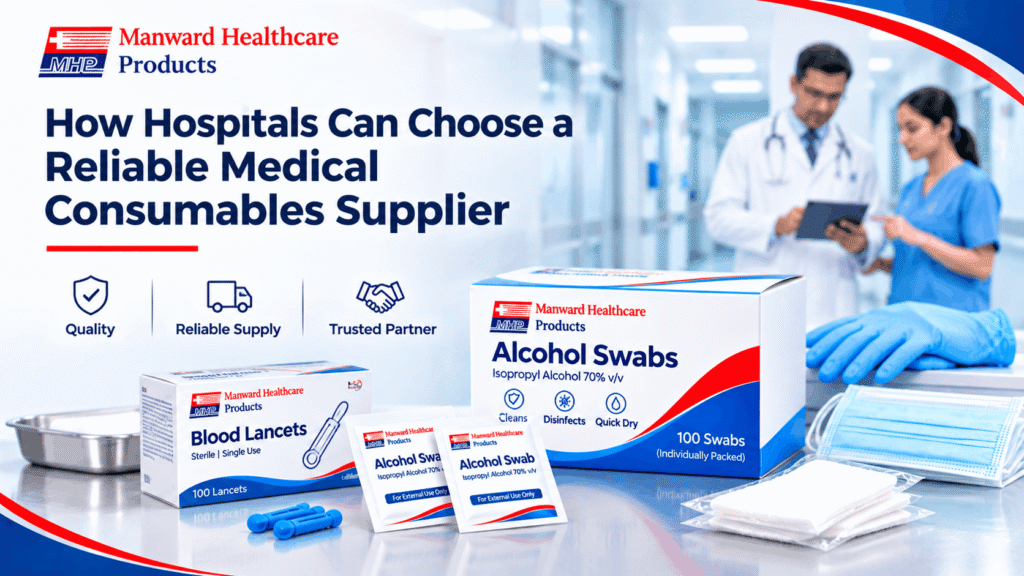
Prepare a list of products, intended applications, specifications, pack sizes and estimated consumption. For alcohol swabs, lancets, gloves and IV consumables, compare like-for-like specifications rather than product names alone.
Verify product information
Request current datasheets, labels, dimensions, material details, packaging information, expiry details and instructions for use. Check whether claims such as sterile, single-use or compatible apply to the exact product offered.
Review documentation
Ask for documents relevant to the product and supplier, and verify their scope, validity and issuing body. A company certificate does not automatically mean every product is covered by it. Check the product-specific approvals and records that apply.
Assess supply capability
Discuss availability, lead times, minimum order quantities, carton configuration, dispatch arrangements and repeat-order capacity. Ask how shortages or shipment delays are communicated.
Compare total procurement value
Compare unit price alongside freight, pack quantity, payment terms, lead time, product conformity and expected wastage. A low price may not represent good value if specifications differ or supply is unreliable.
Build a supplier review process
Review delivery reliability, product conformity, complaint handling, responsiveness and documentation updates. Maintain records of approved products and supplier contacts.
Conclusion
A suitable supplier should provide clear product information, relevant documentation, transparent terms and realistic supply commitments. Manward Healthcare Products welcomes enquiries from hospitals, clinics, diagnostic centres and distributors about its product range and bulk supply options.
