November 19, 2026 | Ashok Singh
Introduction
An intravenous (IV) cannula is a medical device used by trained healthcare professionals to access a vein for prescribed intravenous therapy. Cannulas are available in different gauges, designs and materials.
What is an IV cannula?
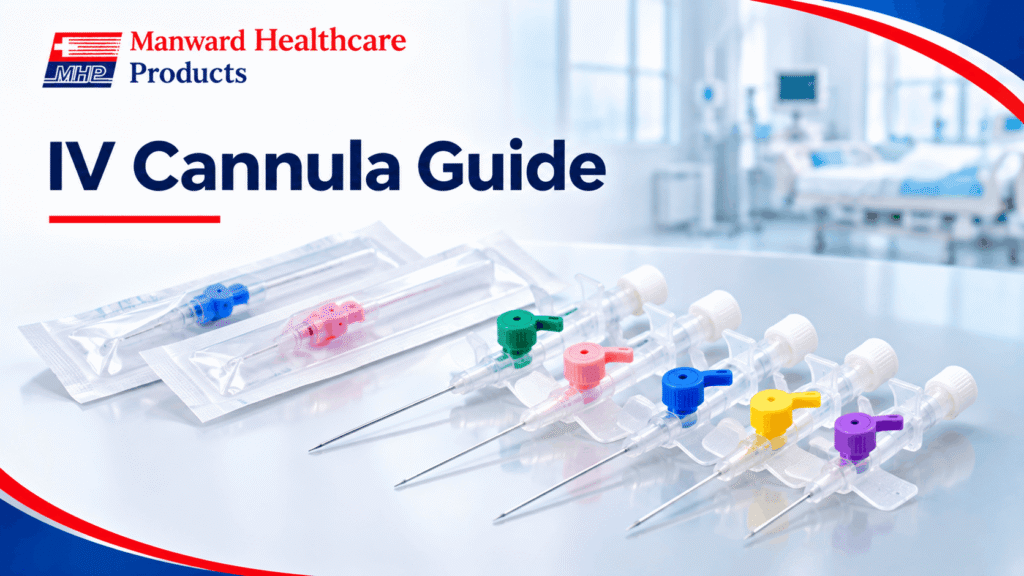
An IV cannula commonly includes a flexible catheter, an introducer needle, a hub and protective components. Exact construction varies by product. Insertion and care must be performed by trained personnel following clinical protocols.
Understanding gauge sizes
Gauge is a sizing convention. Generally, a higher gauge number corresponds to a smaller external diameter, while a lower gauge number corresponds to a larger diameter. Selection depends on the patient, vein, prescribed therapy and clinical judgement. Verify dimensions and colour coding against the manufacturer’s product information.
Types and features
Cannulas can differ in catheter material, port configuration, wings, safety features and connector design. Some include injection ports or safety mechanisms. Buyers should review the exact configuration rather than assuming all products are alike.
Clinical applications
IV cannulas provide access for prescribed fluid administration, medication delivery and other intravenous therapies. Product selection, insertion, maintenance and removal are matters for qualified healthcare professionals.
What buyers should check
Review gauge range, catheter material, needle design, port and connector configuration, safety features, sterility, packaging, shelf life, applicable standards and instructions for use. Confirm suitability with clinical and procurement teams.
Conclusion
Selecting an IV cannula requires attention to device design, gauge, intended application and supporting documentation. Contact Manward Healthcare Products for information about its listed IV cannula range and current availability.
